Dashain and Tihar: Experiencing Nepal’s Biggest Festivals as a Volunteer
Red tika and blessings from elders, kites and bamboo swings, lamps for Laxmi and garlands for dogs: what Nepal’s autumn festivals mean, and how volunteers can join in respectfully.
Global Citizens Nepal Team
Programme team, Kathmandu • • 7 min read
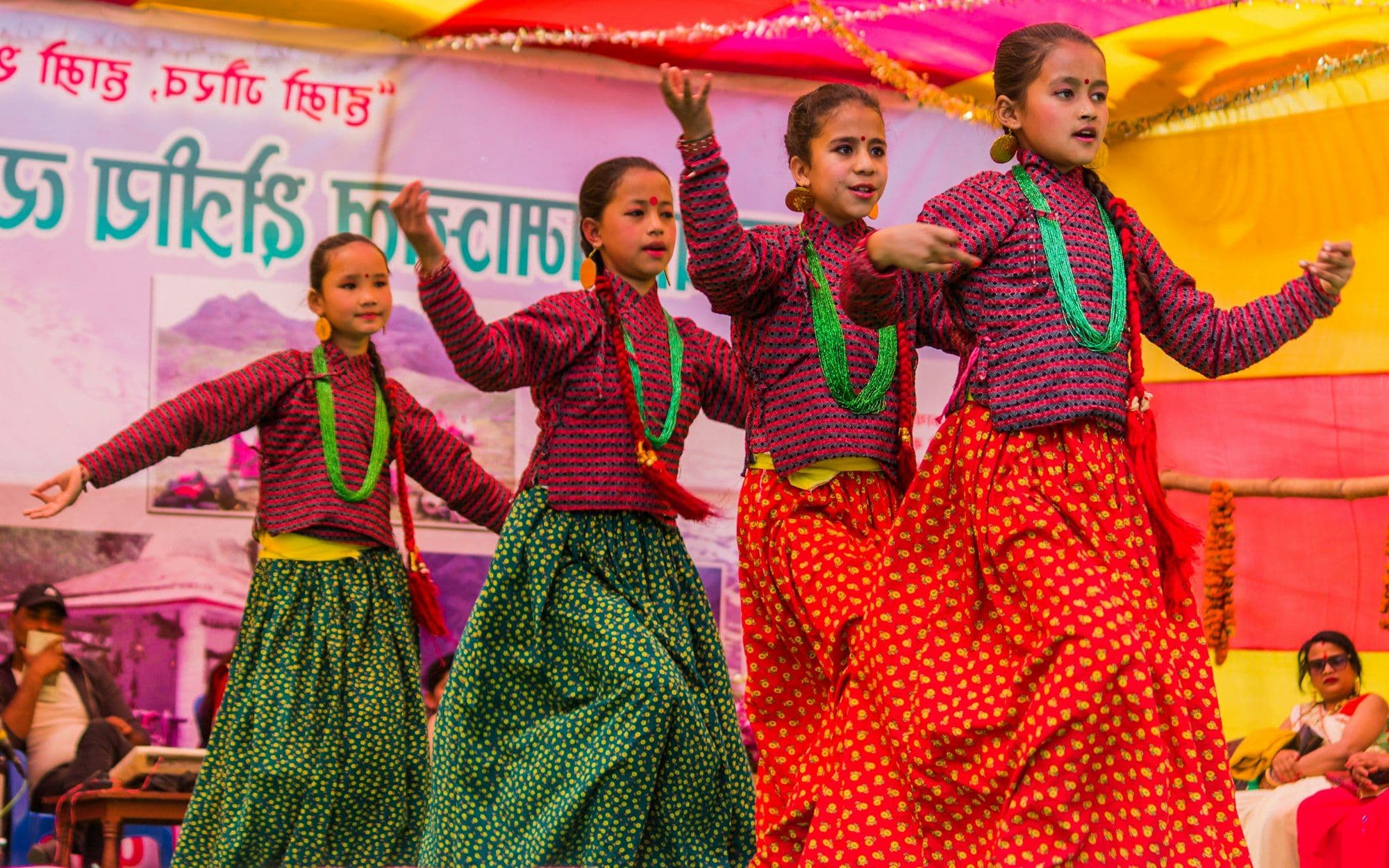
Every autumn, Nepal slows down, dresses up and goes home. Dashain and Tihar are the country’s two biggest festivals, and volunteers who are here between late September and November often say these weeks are the highlight of their stay. Here is what to expect and how to take part with respect.
Dashain: fifteen days of family, blessings and kites
Dashain celebrates the victory of the goddess Durga over the demon Mahishasura, the triumph of good over evil. It begins with Ghatasthapana, when families plant barley seeds (jamara) in a sacred corner of the home, and builds over fifteen days. Cities empty as people travel to their home villages, kites fill the sky and children queue for the giant bamboo swings (ping) built in every neighbourhood.
The most important day is Vijaya Dashami, when elders place red tika (rice, yoghurt and vermilion) on the foreheads of younger relatives, tuck jamara behind their ears and give blessings and a little money. Many host families invite their volunteers to receive tika too, which is a real honour. Animal sacrifices take place at some temples and homes around the eighth and ninth days; you do not have to watch, and our team can tell you where and when they happen.
Tihar: the festival of lights
About two weeks later comes Tihar, five days that honour the animals and relationships that matter in daily life. Crows are fed on the first day and dogs are garlanded with marigolds on the second. On the third day cows are worshipped in the morning, and in the evening homes are cleaned, lit with oil lamps and decorated with colourful rangoli to welcome Laxmi, the goddess of wealth. Groups of children and young people go door to door singing Bhailo and Deusi songs in exchange for treats.
The festival ends with Bhai Tika, when sisters give their brothers a seven-coloured tika and a garland, pray for their long life and receive gifts in return. In the Newar community of the Kathmandu Valley, Tihar also marks Mha Puja and the Nepal Sambat new year.
Tips for volunteers during the festivals
- Plan your placement: schools close for a long Dashain holiday and many offices close too, so teaching volunteers should plan around it.
- Book travel early: buses and flights fill up as millions travel home.
- Accept tika gracefully: bow your head slightly, receive with thanks and keep it on for the day.
- Dress modestly for family gatherings and temple visits.
- Bring a small gift such as fruit or sweets when you are invited to a home.
- Join the fun: fly a kite, try the ping and learn a Deusi verse.
Exact dates follow the lunar calendar and change every year, so ask our Kathmandu team for this year’s calendar when you plan your trip.
Written by Global Citizens Nepal Team
Programme team, Kathmandu
Our Kathmandu-based team has hosted volunteers, interns and travellers in Nepal since 2019.